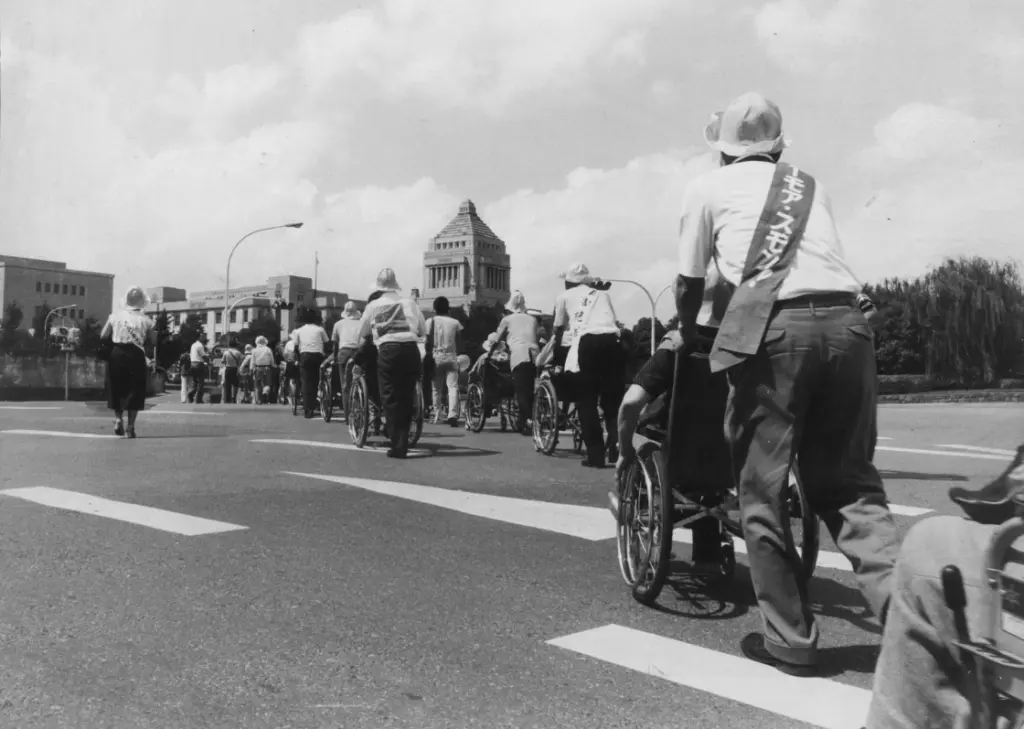
From the 1950s to the 1970s, people across Japan began reporting symptoms such as worsening eyesight and numbness or pain throughout the body. This condition was later named Subacute Myelo-Optico-Neuropathy (SMON). Initially, the cause of the illness was unknown and was suspected to be contagious. Consequently, patients were feared, avoided, and subjected to prejudice and discrimination. Later research revealed that the cause of these symptoms was clioquinol, a chemical contained in intestinal medicines that were widely used at the time. SMON victims filed lawsuits against the pharmaceutical companies that manufactured and sold these medicines, as well as against the Japanese government. As a result of these court cases, the victims received official apologies and compensation. These lawsuits became a major turning point in Japan. Laws were established to regulate the safety of medicines, opening a path toward preventing drug-induced suffering. It is estimated that the total number of SMON victims exceeded 10,000.
| 1940 | Clioquinol used in several countries since wartime |
| 1943 | Commencement of Kinohorm (Enterovihorm) imports |
| 1945 | End of the war. Countries halt quinolform sales; only Japan continues commercial distribution |
| 1955 | Health damage occurs (Approximately 1955–1970) |
| 1969 | The Ministry of Health and Welfare establishes the research group |
| 1970 | Emergence of the “SMON = clioquinol hypothesis” (Associate Professor Inoue, Kyoto University) and the “SMON = viral hypothesis” (Professor Tamura, University of Tokyo) The Ministry of Health and Welfare bans quinolium use at the Central Pharmaceutical Affairs Council |
| 1971 | Lawsuits filed against the government and pharmaceutical companies |
| 1977 | District Court ruling (plaintiffs prevail) |
| 1979 | Settlement |
Read More
1. Emergence and identification of the cause
In the early twentieth century, the major imperial powers produced medicines using clioquinol, a chemical derived from the cinchona plant, to prevent and treat malaria and amoebic dysentery in their southern colonies. Due to its neurotoxic effects, clioquinol was classified as a highly toxic drug in Japan during wartime. However, in 1939, the Ministry of Home Affairs lifted this classification without providing any explanation, and domestic production of clioquinol-based medicines began. After the end of Second World War, Japan reviewed many medicines that had been used during the war, but clioquinol did not regain its previous toxic classification. On the contrary, it came to be treated as a safe drug. Its approved uses were expanded, and it came to be widely added to over-the-counter stomach and intestinal medicines, which were then made available for sale without a prescription. Among people who took these clioquinol-based medicines, symptoms such as blurred vision and blindness, paralysis of the arms and legs, and difficulty walking began to occur. Taking the initial letters of these symptoms, the condition was named SMON (Subacute Myelo-Optico-Neuropathy). However, at the time, the cause of the illness was unknown. SMON victims suffered from the progression of their symptoms while having no clear explanation of the cause or effective treatment. Simultaneously, they were forced to endure prejudice and discrimination. Although cases of harm had already begun to appear around 1955, a cluster of cases occurred in Toda City, Saitama Prefecture, where the rowing events of the Tokyo Olympics were scheduled to be held. Because of this, the condition came to be called “Toda disease.” The former Ministry of Health and Welfare (MHW) organized a research group to investigate the condition. However, the budget allocated to the group was very limited, and the research made little progress before the group was eventually disbanded. Later, in 1969, a large number of SMON victims were reported in certain areas of Okayama Prefecture. In response to petitions submitted by local municipalities, the former MHW established a new research group.
2. Cause identified; victims file lawsuit
Patients’ excreta appeared green. In 1970, Prof. Zenzo Tamura of the University of Tokyo demonstrated that the coloring agent—and the cause of the condition—was clioquinol, which was present in contemporaneous stomach and intestinal medicines. This view became known as the “SMON = clioquinol hypothesis.” Around the same time, Inoue, then an associate professor at Kyoto University, advanced a competing “SMON = viral hypothesis,” which was widely reported in the press and intensified discrimination; consequently, some patients took their own lives. As research advanced, Prof. Tadao Tsubaki of Niigata University, known for his work on Minamata disease in Niigata, initiated epidemiological studies supporting the “SMON = clioquinol hypothesis.” Within a month, a correlation between clioquinol use and the incidence of SMON was recognized, and the MHW suspended the sale of clioquinol products.
3. Victims’ Organizing
Suffering from an unexplained condition, patients had already begun networking, petitioning, and providing mutual support. In 1969, SMON patients established a nationwide organization and began policy advocacy. Recognizing that their use of stomach and intestinal medicines was the cause, victims decided to pursue litigation. Initial lawsuits were filed individually against pharmaceutical companies, the state, and the doctors and hospitals that prescribed the drugs, but these later evolved into nationwide group actions. Despite organizational splits and subsequent realignments, litigation structures were gradually put in place, and group lawsuits spread nationwide. In solidarity with contemporaneous anti-Kogai (environmental pollution) movements, victims publicized their cause. After roughly a decade, all district courts ruled in favor of the plaintiffs. Victims and defendants—the state and pharmaceutical companies—signed a “confirmation document,” acknowledging that clioquinol medicines had caused SMON and obligating the companies to compensate the plaintiffs. Government policy subsequently facilitated relief through settlement-based measures.
4. Regulatory Implications
In parallel, the Diet debated the “Pharmaceutical Affairs Law Amendment” and the “Relief System for Sufferers from Adverse Drug Reactions.” Linked to the SMON litigation, the former tightened procedures for new drug approval, while the latter aimed to fund compensation for drug-induced suffering through contributions from industry. Enacted in 1979, these measures affirmed state responsibility for drug safety and institutionalized relief. For SMON patients, permanent relief measures—including investigation of the cause, development of treatments, and ongoing health management—were implemented under national policy.
Reference
- Jitsukawa, Yuta (ed.), 1990, Graphic Document: SMON, NIPPON HYORON SHA.